
USDJPY Oil Prices and Japan Trade Deficit: EA Logs
· Updated

USDJPY oil prices Japan trade deficit is best treated as a risk-regime problem for a yen EA, not as a buy or sell signal. When oil lifts Japan’s import bill, the robot should log price gaps, Asia-session opening spreads, ATR changes and overlapping yen exposure in USDJPY and GBPJPY. The goal is not to forecast intervention or BOJ policy, but to measure execution quality and portfolio concentration.
USDJPY Oil Prices Japan Trade Deficit: A Risk-Regime Problem
USDJPY oil prices Japan trade deficit becomes relevant to a yen EA when the trader treats it as a risk-regime change, not a directional signal. On 21 October 2026, AP reported that Japan’s trade deficit for the first fiscal half reached 2.81 trillion yen, with surging oil import prices linked to the war in Iran. apnews.com
Reuters gave the shorter-term trading backdrop on the same date: Japan’s September exports rose 16.7% year over year, imports rose 18.9%, and the September trade balance remained in deficit at 536.6 billion yen. That mix matters because export strength does not remove the yen risk created by a larger energy import bill. investing.com
For a systematic trader, the practical question is not whether USDJPY will reverse from a round number. The practical question is whether the algorithm keeps enough data to explain its behavior when oil, Japan’s trade deficit and sensitive yen levels are all part of the same market conversation.
What a Yen EA Should Log Instead of Forecasting Intervention
In a headline-heavy yen market, the temptation is to forecast intervention, Bank of Japan language or the next psychological USDJPY level. But news reports and official data mainly explain why the market is sensitive; they do not guarantee a linear, repeatable or tradable reaction.
The Bank of Japan’s April 2026 outlook noted that mineral fuels make up the overwhelming share of Japan’s imports from the Middle East, and that more than 90% of Japan’s annual crude oil imports are sourced from the region. For an EA, that means an oil shock is not just an external commodity story; it can change the yen trading regime through the terms of trade, imported inflation and FX flows. boj.or.jp
The log should connect the headline to the cost of trading. When oil rises and the market discusses Japan’s trade deficit, it is not enough to record profit and loss. The EA should show whether the order was filled in a normal spread, whether there was an Asia-open gap, and whether ATR had jumped relative to its recent baseline.
| Market factor | What the yen EA should log |
|---|---|
| Energy-led trade deficit | Regime tag: oil-import shock, date, release time and first-reaction window |
| Fast USDJPY move | Candle gap, execution distance from requested price and ATR before versus after the news |
| GBPJPY risk overlap | Open yen exposure, correlated floating loss and portfolio heat limit |
| Asia session open | Opening spread, order-fill quality and slippage in the first minutes |
| Intervention or BOJ speculation | No forecast; log trade pauses, spread widening and volatility jumps |
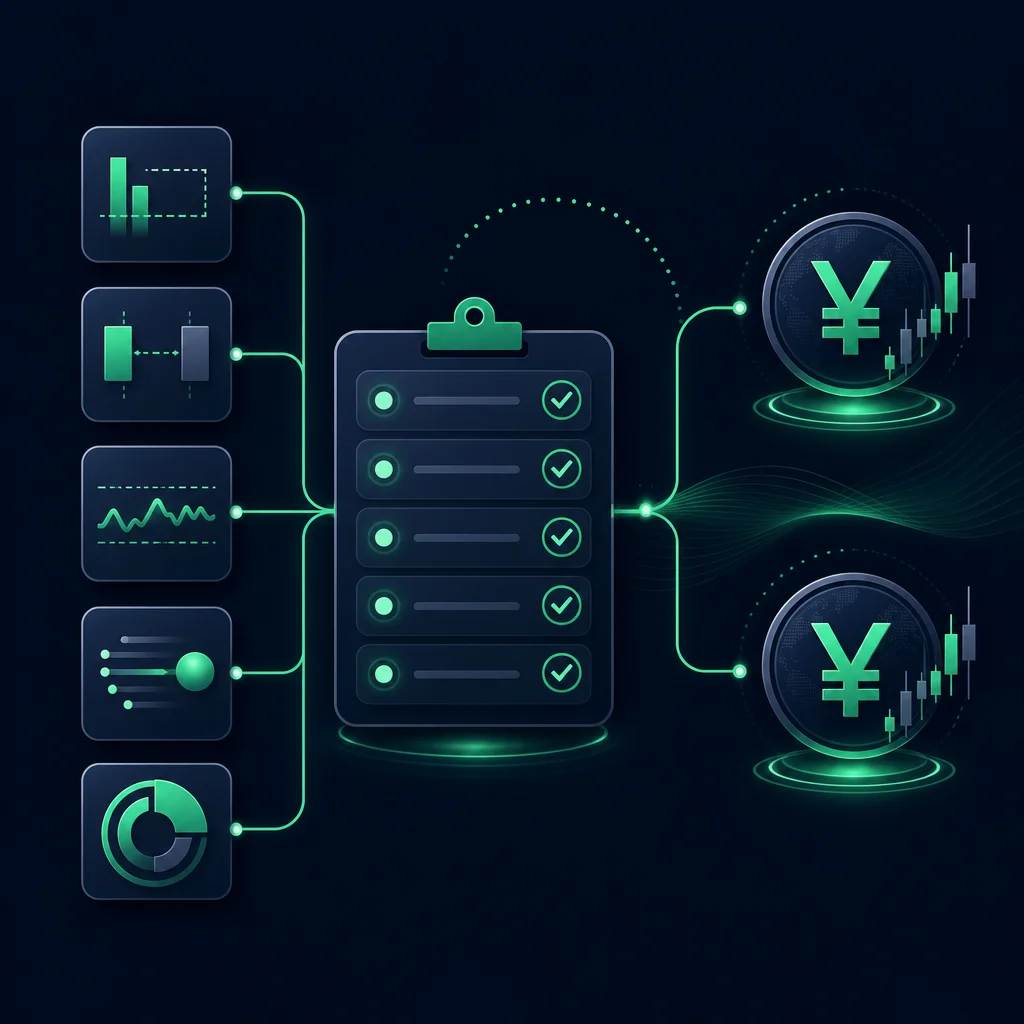
USDJPY Gaps, Asia-Open Spreads and ATR Changes
An oil shock does not enter the yen order book through one clean channel. The headline may break during a thinner liquidity window, USDJPY may open the Asia session with a gap, and London or New York may reprice the move later. If the EA stores only entry and exit prices, it cannot tell whether a loss came from strategy logic or execution conditions.
ATR is not a forecasting tool here; it is a regime thermometer. When short-window ATR rises sharply versus the longer baseline, the same stop distance, entry rule and exit logic can carry a different risk meaning. The robot should be able to show how many trades were opened in abnormal volatility and how their results differed from normal-session trades.
Asia-open spreads deserve separate attention for yen pairs because part of the reaction to Japanese trade data, oil headlines or policy comments can occur before liquidity is deep. Recording those spreads helps the trader decide whether a live-backtest gap is a strategy issue or an execution-cost issue that was understated in historical data.
- Store the event label separately from trade direction: for example, trade-deficit, oil-shock, BOJ-week or intervention-risk.
- For every entry, record the live spread, the average spread over the previous five minutes and the average spread at the Asia open.
- For USDJPY and GBPJPY, store short-window ATR beside long-window ATR so the trade can be classified as compressed, normal or shock-regime.
- Record slippage both in pips and as a share of ATR; one pip of slippage in a quiet market is not the same as one pip during an oil shock.
- If several yen trades are open, log combined open risk and portfolio floating drawdown, not only single-trade risk.
GBPJPY Risk and Concentrated Yen Exposure
The USDJPY oil prices Japan trade deficit theme is not limited to USDJPY. If an EA also trades GBPJPY, oil-driven yen pressure can make trades that appear independent become exposed to the same underlying factor: yen direction and yen volatility.
GBPJPY risk comes from both legs. The yen side can react to oil, the trade balance, BOJ expectations and intervention risk; the sterling side can react to UK data, rate expectations and fiscal headlines. A robot should not assume that changing the symbol automatically diversifies the risk.
The practical answer is portfolio heat logging. If USDJPY and GBPJPY both show abnormal ATR or spread widening in the same window, risk control should treat that as yen concentration. This is not a buy or sell signal; it is a guardrail against multiplying the same shock across several trades.
Backtesting an Oil Shock Without Overfitting
When a story is current, it is easy to write an overly specific rule such as: do not trade when oil rises and USDJPY is near a chosen round level. The problem is that such a rule may look sensible across a small set of recent examples and fail in the next regime.
A better method is to tag events and then compare performance by regime. For example, split USDJPY and GBPJPY trades into normal days, Japan trade-data days, BOJ weeks and oil-shock windows. Then compare drawdown, time under the previous equity high and execution cost in each group before changing parameters.
This is where transparent backtest language matters. For LFP, the robot’s figures should be read through backtest tokens: 7 markets in the backtest, 6 strategies in the backtest, and a backtest beginning in 2020. These are not promises about future performance; they are the frame for asking which historical conditions were included in the measurement.
| Criterion | Policy or intervention forecast | Risk-regime logging |
|---|---|---|
| Goal | Guess USDJPY direction after oil news | Measure execution quality and regime change |
| Main data | Headline, round level, policy rumor | Spread, gap, ATR, slippage, trade timestamp |
| Common error | Overfitting to a few news events | Under-recording context and trading cost |
| Review output | Whether one forecast was right or wrong | Performance comparison across normal and shock regimes |
| Fit for an EA | Weak, because policy reaction is unstable | Stronger, because the data can be tested and audited |
A Risk-First Checklist for Automated Yen Trading
For retail traders, the value of this story is not in predicting oil or Japanese policy. The value is in turning a macro narrative into measurable fields. If the EA can show when it traded, what the spread was, which ATR regime was active and whether several yen pairs were open together, the later review becomes calmer and more auditable.
AP also noted that the U.S. dollar was trading at high yen levels at the time, while the Reuters report for 21 October listed an exchange reference of 158.2600 yen per dollar; for this article, the exact date, 21 October 2026, is more useful than treating 150 as a fixed mechanical trigger. apnews.com
A sound EA should not turn an oil headline into a directional conclusion. It should ask: did trading cost change, did liquidity become thinner, did USDJPY and GBPJPY risk stack on top of each other, and can the next report explain the trade without hindsight?
- Before going live, check the broker’s USDJPY and GBPJPY contract specification: contract size, digits, minimum lot, swap and trading hours.
- For weeks with Japan trade data, BOJ decisions or oil shocks, define a fixed calendar tag so trades can be reviewed separately later.
- If the Asia-open spread exceeds the logged threshold, allow size reduction, a temporary pause or an entry filter only if that rule was written in advance.
- In the monthly review, examine yen trades separately from the full portfolio and ask whether drawdown came from several yen pairs at once.
- After any broker or server change, compare slippage and spread logs again; live data is not automatically identical to the backtest environment.
Frequently asked
- Do higher oil prices always weaken the yen and lift USDJPY?
- No. Oil can pressure the yen through import costs and the trade balance, but interest-rate spreads, global risk appetite and possible intervention can offset or reverse that pressure. A yen EA should log the regime rather than assume a fixed directional relationship.
- What should a yen EA log before trading USDJPY and GBPJPY?
- At minimum, it should log price gaps, Asia-session opening spreads, short- and long-window ATR, news timestamps, swap and slippage. If more than one yen pair is active, it should also record combined yen exposure and floating drawdown across the portfolio.
- Should an EA try to predict Bank of Japan policy or FX intervention?
- No. Policy reactions can be sudden, discretionary and hard to model with stable rules. A systematic approach is to measure spreads, gaps, ATR and execution quality around sensitive windows instead of forecasting officials.
- How does Japan’s trade deficit relate to EA execution risk?
- The deficit is not a buy or sell signal, but it can mark an environment where oil headlines, yen volatility and spreads become less stable. Backtests and live reviews should therefore separate trades taken in normal regimes from trades taken in oil-shock regimes.
This is educational material, not investment advice. All performance figures are backtest results, not live trading, and are no guarantee of future results.